
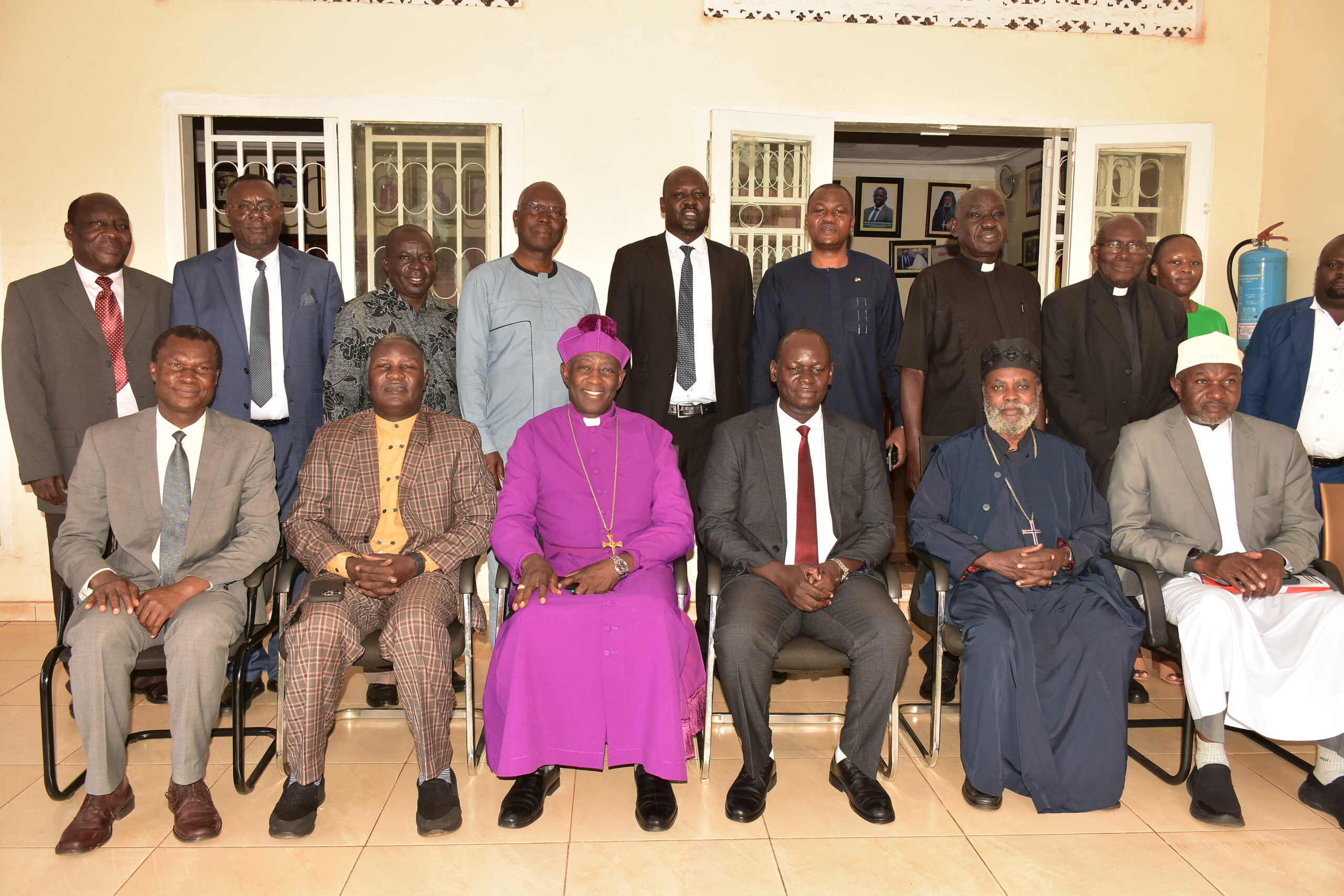
RELIGIOUS LEADERS ARE DOING MUCH MORE THAN MANY REALIZE
By Joshua Kitakule, Secretary General, IRCU
At a time when Uganda is experiencing heightened political polarization, public discourse—especially on social media—has increasingly become hostile and intolerant of differing views. Political activists and commentators often dismiss, ridicule, or attack individuals and institutions that do not align with their perspectives. This growing culture of intolerance threatens the very foundations of democracy, which depends on respectful engagement, diversity of thought, dialogue, and national cohesion.
In recent weeks, the archbishop of the Church of Uganda, the Most Rev. Dr. Stephen Samuel Kaziimba Mugalu, who also serves as Chairperson of the Council of Presidents of the Inter-Religious Council of Uganda (IRCU), has faced criticism from some political activists who accuse religious leaders of “silence” in the face of national challenges. Such accusations overlook the extensive and often sensitive work religious leaders continue to undertake behind the scenes in promoting peace, reconciliation, mediation, accountability, and national stability.
Far from being silent, IRCU and its leadership have consistently played a critical role in safeguarding Uganda during periods of political uncertainty and heightened tension. Religious leaders under IRCU deliberately choose engagement over confrontation, bridge-building over division, and dialogue over hostility. Our mission is not partisan politics, but the pursuit of the common good and the preservation of national harmony.
Under the leadership of Archbishop Kaziimba Mugalu and the IRCU Council of Presidents, religious leaders have continued to engage key national stakeholders—including government leaders, opposition actors, security agencies, the Electoral Commission, civil society, and community leaders—to promote peaceful coexistence and prevent conflict escalation. Much of this work happens quietly and confidentially because peacebuilding requires trust, discretion, and credibility. Responsible mediation is not conducted through media theatrics or public grandstanding, but through strategic engagement and constructive dialogue.
During periods of heightened political tension, IRCU has repeatedly intervened to calm tempers and encourage restraint among political actors and their supporters. Religious leaders have engaged those in positions of authority to ensure that power is exercised responsibly, with respect for human rights, justice, constitutionalism, and the dignity of all Ugandans. At the same time, IRCU has also reached out to opposition leaders and political groups to encourage peaceful participation, dialogue, and nonviolent engagement.
The role of IRCU before, during, and after elections has been particularly significant. In every electoral cycle, IRCU mobilizes the country toward peaceful, free, fair, and credible elections by convening and coordinating key stakeholders and duty bearers in the electoral process. These include the Electoral Commission, political parties, security agencies, civil society organizations, cultural leaders, youth groups, women leaders, and the media. Through consultations, peace campaigns, voter education, interfaith prayers, and strategic engagements, IRCU works tirelessly to reduce tensions and strengthen public confidence in the democratic process.
Religious leaders also consistently remind those entrusted with authority that leadership must be exercised in accordance with Uganda’s national values and motto, “For God and My Country.” We advocate for professionalism, accountability, justice, restraint, and the protection of human rights, recognizing that sustainable peace and development can only flourish in an environment where citizens feel secure, respected, and included.
Many Ugandans may never fully know the extent of IRCU’s interventions during difficult national moments because much of this work is intentionally conducted away from public attention. Yet these quiet engagements have often contributed significantly to de-escalating tensions, preventing violence, preserving dialogue, and maintaining national stability. The wisdom and restraint demonstrated by religious leaders should therefore not be mistaken for silence or weakness. Rather, it reflects maturity, integrity, servant leadership, and commitment to the long-term peace and unity of Uganda.
IRCU’s work is ultimately guided by a broader national vision: “The Uganda We Want” — a divinely peaceful, organized, harmonious, secure, caring, prosperous, and healthy nation where all people can live with dignity and contribute productively toward national transformation. The Council believes that Uganda’s future depends on mobilizing the energies of all citizens toward peace, reconciliation, development, and shared national purpose rather than division and hostility.
The Inter-Religious Council of Uganda therefore remains a credible moral voice above partisan conflict while continuing to speak truth to power with wisdom, courage, and responsibility. That is the role IRCU continues to play. Its contribution to peacebuilding, mediation, electoral stability, and national dialogue deserves recognition and support. Even where disagreements exist, Ugandans must learn to disagree respectfully, recognizing that lasting peace and democratic progress are built not through hatred and confrontation, but through dialogue, understanding, and unity.