
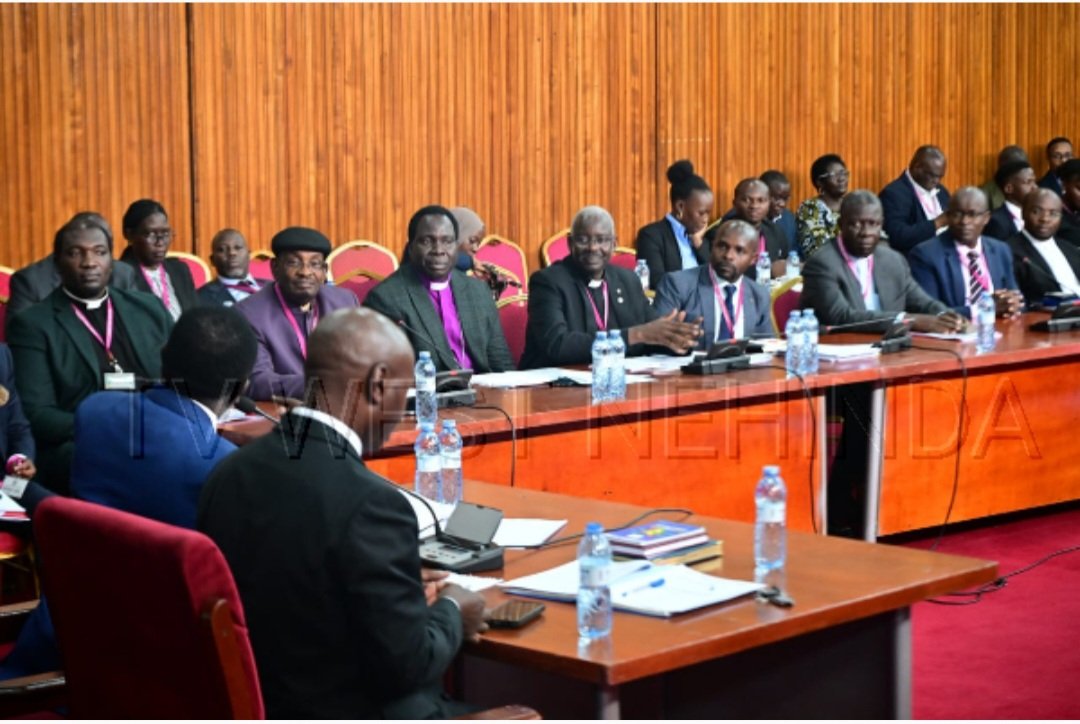
IRCU rejects Protection of Sovereignty Bill 2026 in its current form
On 28th April 2026, the Inter-Religious Council of Uganda (IRCU) presented its position on the Protection of Sovereignty Bill, currently before the 11th Parliament of Uganda. Appearing before the joint parliamentary committee on Legal, Defence, and Internal Affairs, the IRCU delegation led by Apostle Dr. Joseph Serwadda argued that the Bill, in its current form, violates several rights and freedoms enshrined in the 1995 Constitution of the Republic of Uganda.
The Council noted that certain clauses in the Bill undermine the sovereignty of the people of Uganda, which is protected under Article 1 of the Constitution.
Just to highlight a few examples of some of the Key Concerns in this bill include:
Clause 22 – Restrictions on Funding
- The IRCU described this as one of the most consequential provisions, warning it could negatively affect churches, NGOs, schools, humanitarian bodies, private businesses, development programs, and diaspora-supported initiatives.
- It may slow investment, remittances, and legitimate international support.
- The clause could give government undue control over the income of religious institutions, amounting to interference in their internal affairs.
- It risks violating the operational independence of individuals, NGOs, and faith-based organizations by creating bottlenecks.
Clause 21 – Declaration of Sources of Funding/Reporting
- The IRCU warned that these provisions grant government far-reaching powers to interfere with private matters of individuals and organizations.
- They impose recurring compliance obligations backed by criminal sanctions, increasing administrative burdens and enforcement risks.
- The requirements could violate institutional privacy, disrupt business operations, and duplicate existing obligations already overseen by agencies such as the NGO Bureau, URSB, Banks, and the Financial Intelligence Authority.
- Concerns were also raised about confidentiality, especially if declarations become publicly accessible.
General Recommendations to Parliament
The IRCU urged Parliament to:
- Revise vague and overly broad definitions (e.g., “foreign agent,” “foreigner,” “public interest,” “economic sabotage”).
- Limit excessive ministerial powers, ensuring fair hearing and appeal safeguards.
- Remove provisions criminalizing lawful fundraising by Ugandans abroad, which could harm remittances and local investments.
- Strengthen coordination among existing agencies rather than creating parallel structures.
- Promote public-private partnerships and inclusive governance with NGOs and faith-based organizations.
- Establish alternative dispute resolution mechanisms, such as an inter-ministerial tribunal, to reduce court backlogs.
- Ensure punishments are reasonable, proportionate, and aligned with constitutional guarantees.
- Avoid restricting the amount of funds received; instead, strengthen oversight through existing institutions like the FIA and Bank of Uganda.
- Safeguard constitutional freedoms, including association, expression, fair hearing, and the right to acquire resources.
- Respect the independence of faith and civic institutions, recognizing their role in service delivery.
- Consider the Bill as a subject for national dialogue, given its potential impact on socio-economic development.
Conclusion
The IRCU rejected the Bill in its current form, citing constitutional violations, risks of shrinking civic space, and threats to civil, religious, and political rights.
“Honourable Members, a strong law is not one that restricts broadly. It is one that distinguishes carefully. If we draw the line well, we will protect the nation without weakening the very people who sustain it,” the Council stated.
The IRCU cautioned that passing the Bill as it stands would stifle the funding base of religious institutions, expose their internal affairs to government scrutiny, and hinder religious freedom and evangelism.
Finally, the Council urged Parliament to focus on building bridges and nurturing harmony after a polarizing election period, rather than pursuing legislation that could destabilize communities.
Read more IRCU GENERAL MEMORANDUM TO PARLIAMENT OF UGANDA ON PROTECTION OF SOVEREIGNTY BILL